
Education·15 September 2020
Sophie Swaton: 'Let's humbly return back to earth and protect it while there is still time.'
Climate | #ecological crisis | Interview Published on 14 September 2020, 05:00. Updated on 15 September 2020, 09:31. Sophie Swaton: 'Let's humbly return back to earth and protect it while there is still time.' by Bruno Jochum Sophie Swaton is a lecturer-researcher at the University of Lausanne, and
Climate | #ecological crisis | Interview
Sophie Swaton: 'Let's humbly return back to earth and protect it while there is still time.'
by Bruno Jochum
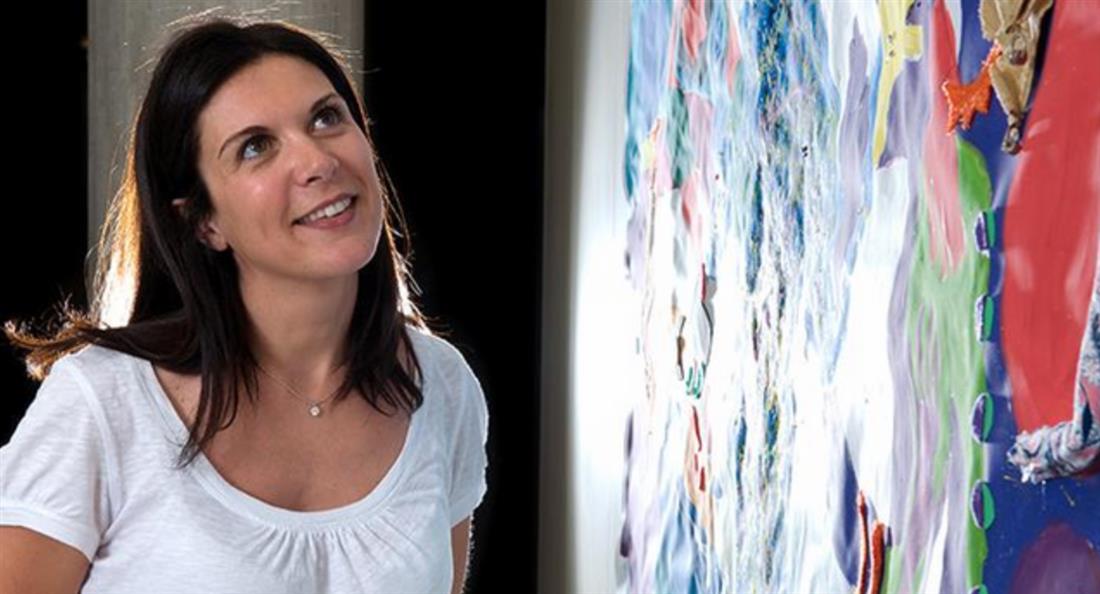
Sophie Swaton is a lecturer-researcher at the University of Lausanne, and the co-author of Return to Earth (Retour sur Terre), a new book that sets out 35 ways to rebuild society over the next 10 years and avert the accelerating ecological crisis. A philosopher and economist, Swaton also chairs the ZOEIN foundation, which supports the ecological transition income (RTE), an economic model she designed. On 26 September she will lead a round table with three of the co-authors of Retour sur Terre, for the Alternatiba Léman festival in Geneva. Though adapted to specificities of the French society, many of the measures in the book have a universal character and are applicable to other countries and continents.
Geneva Solutions: Together with several other researchers, you have just published an almost “revolutionary” work, Return to Earth. What is the basic intention of this book?
Sophie Swaton: This book was written at the beginning of the lockdown period, when, after only a few weeks, the first photos were circulating of clear skies, we were collectively rediscovering silence and its virtues, becoming aware of the importance of the care professions and of a resilient state in times of crisis. The parallel with the ecological and social crisis that the scientists were announcing seemed obvious. Our intention was therefore to take the time to think and to lay out what could be ideal measures tending towards a truly ecological society. What social, economic, and political programme could be proposed that really takes the threat of collapse seriously?
You propose the establishment of a third parliamentary chamber, the Chamber of the Future, which would guarantee the long-term interests of our societies in the face of the ecological crisis. Can you tell us more about it?
This proposal is part of a democratic dynamic to gradually transform institutions and to ensure that the State truly guarantees respect for the ecological footprint and planetary limits. At the centre of this idea is recognizing ecosystems or, for example, elements that make them up (rivers, glaciers), as subjects of rights. Such a long term perspective needs to be taken into account by the legislative power in order to strengthen its ability to represent all interests in society. In this respect, the creation of a Chamber of the Future between the Senate and the National Assembly, based on renewed constitutional principles, would make sense.
You propose the introduction of both individual and collective quotas for the use of energy and materials. How far does the extremely alarming situation in which we find ourselves move the line between individual freedom and coercion? How can the state guarantee a fair balance between the two?
Precisely, this measure of quotas cannot be understood without looking at the central issue: it is the survival of humanity that is at stake! Does the word freedom have another meaning than that of consuming three times more - at least - than the Earth can bear to regenerate itself? We hope so. For it is to protect ourselves and to allow us to continue to exercise our freedom to care for ourselves, educate, house and express ourselves, undertake and invest, work in a job that makes sense for ourselves and for society that we need a framework. Such a framework is based on the notion of planetary boundaries, which a measure like quotas operationalizes into practice, but without a “fascist” or “punitive” coercion: the measure itself is accompanied by others, including aid for the transformation of the local and global economic models.
This measure of quotas cannot be understood without looking at the central issue: it is the survival of humanity that is at stake! Does the word freedom have another meaning than that of consuming three times more - at least - than the Earth can bear to regenerate itself? We hope so.
As a third way between “public” and “private” goods, you propose the development of 'common goods'. What are these?
Common goods or the “commons”, as referred to in the history of social economy, are half way between an all-market and an all-state approach. To be considered as “commons”, there must be a resource needing protection; a community in charge; and a set of rules to be respected. In this sense, we need a state that can guarantee the protection of the “commons” and their free expression. A state that establishes itself as a bulwark against excessive privatisation and misappropriation of the public good, of which it cannot, without contradiction, be an accomplice.
Why the choice of 'Return to Earth' as a title? At the end of the day, who are the idealists and who are the realists in our times?
The measures we propose are a radical form of rejection of the destructive domination by human beings, not just over each other, but over all the living and the non-living. We do not have a plan B but only one Earth! The realists are those who, like us, estimate that we will not be able to leave with 9 billion inhabitants to Mars, a lifeless planet! Life remains on Earth. Let's humbly return back to Earth and protect it while there is still time. We still have about ten years ahead of us. Will we react in time and put the ecology of living things at the heart of political action? The future will tell us soon enough.
The realists are those who, like us, estimate that we will not be able to leave with 9 billion inhabitants to Mars, a lifeless planet! Life is still on Earth. Let's humbly return back to Earth and protect it while there is still time.
SOURCE: GENEVA SOLUTIONS
Keep reading
Education·28 August 2026
Europe's rivers are warning us with our ancestor's handwriting
ON SOURCE: EUROPEAN CORRESPONDENT Drought My first-ever presentation in primary school was about water. Back then I couldn't have known how much scarcer it would get before I even grew up, or that Europe's rivers are drying up and revealing 400-year-old warnings. Europe's rivers are warning us with
EUROPEAN CORRESPONDENT · 1 min read

Education·19 August 2026
The Polycrisis Calls for Polysolutions
ON SOURCE: FORUM FOR THE FUTURE The Polycrisis Calls for Polysolutions Written by Mareyah Bhatti from Forum for the Future. Earlier this month, I had the pleasure of attending the Food Planet Prize event in Båstad, Sweden. It was a great opportunity to celebrate ambitious food system work from acros
FORUM FOR THE FUTURE · 1 min read
Education·6 July 2026
Global push for AI governance amid warnings of ‘catastrophic harm’
Can artificial intelligence benefit all of humanity – safely, fairly and without causing “catastrophic harm”? That is the question at the heart of a major UN summit opening in Geneva on Monday.
UN News - Global perspective Human stories · 4 min read