
Education·28 August 2026
Europe's rivers are warning us with our ancestor's handwriting
ON SOURCE: EUROPEAN CORRESPONDENT Drought My first-ever presentation in primary school was about water. Back then I couldn't have known how much scarcer it would get before I even grew up, or that Europe's rivers are drying up and revealing 400-year-old warnings. Europe's rivers are warning us with
ON SOURCE: EUROPEAN CORRESPONDENT
Drought
My first-ever presentation in primary school was about water. Back then I couldn't have known how much scarcer it would get before I even grew up, or that Europe's rivers are drying up and revealing 400-year-old warnings.
Europe's rivers are warning us with our ancestor's handwriting
Continent-wide drought used to hit Europe once in a generation. Now, it's almost every other year.
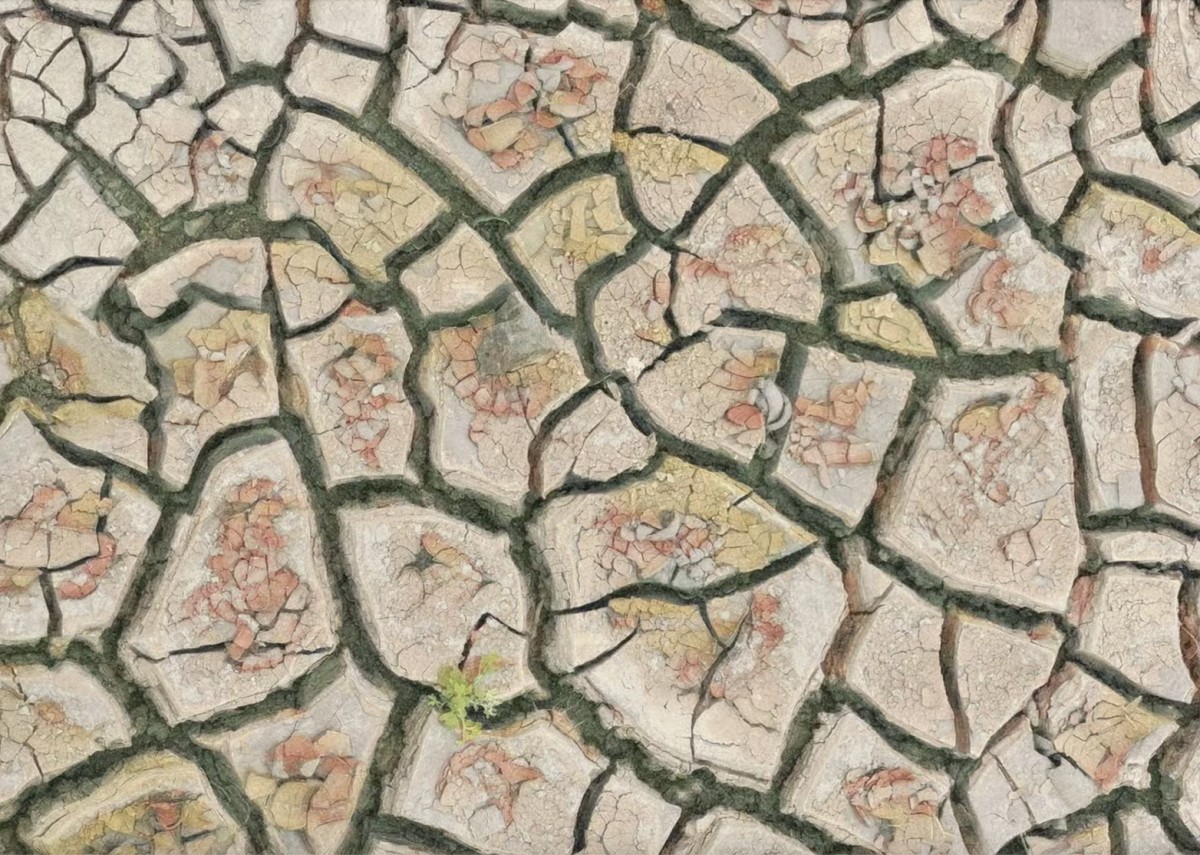
Europe’s major rivers are at record low water levels: the Rhine and the Danube, the Po in Italy, and the Loire in France. Across central Europe, retreating water has exposed hunger stones used as warning markers between the 15th and 19th centuries when rivers' water levels were exceptionally low.
These warnings meant the drought would likely lead to crop failures and famine. The most famous one, which hasn't resurfaced as of 27 August, lies in the Elbe near Děčín, Czechia, and dates back to 1417. It reads: “Wenn du mich siehst, dann weine” – German for “If you see me, weep.”
Low water levels have also exposed World War II artefacts and mammoth bones: a Wehrmacht motorcycle in Budapest, Nazi-era warships in the Serbian stretch of the Danube, and the remains of mammoth in Ryahovo, Bulgaria. In France and Romania, nuclear power plants had to be shut down as the Danube’s water could no longer cool them.
Hunger stone commemorating the 1959 drought located on the Leverkusen Rhine bank, south of the Wupper estuary
Many goods are transported over those rivers, as doing so is both cheaper and greener than sending them by road. Coal, crude oil, and chemicals, but also grains and cocoa, now face supply risks in Europe.
Half of the EU and UK are currently under some level of drought, according to the European Drought Observatory, while 9% is at “alert” level – meaning low rainfall, low soil moisture, and crops under stress.
The resulting shocks to agriculture and manufacturing hit the economy overall: the Euro-Mediterranean Center on Climate Change found that the 2015-2018 drought cost Europe €439 billion.
A “creeping” process
What’s actually making these rivers run dry? It's not (just) the summer heat, says hydrologist Massimiliano Zappa. “The river dries because there is a rainfall deficit, which in some cases can be compounded with hot weather,” he told us. “That also dries out the soils.” When the soils dry out, so do the plants that grow in them – which in turn feeds wildfires.
Data science and hydrology professor Luis Samaniego calls it a “creeping” process: drought starts as a lack of moisture in the atmosphere, which becomes a lack of moisture in the soil, and then turns into a streamflow deficit. “It’s a cascade of events that go on and on.”
Whenever rain does fall, plants and soils soak it up first. Then the groundwater is replenished, and the river fills up last. That’s why drought outlasts heat: by the time the hot period is over, a river's upstream reserves are still empty. “For larger river systems, the drought will persist even if the heat is gone,” Zappa said.
To a lesser extent, rivers also tap into glacier reserves, built up over centuries. Now, those are melting fast. “It’s meant to be like having paid into your retirement plan all your life, and using it when you retire,” Zappa said about the slow build-up of these reserves over time. “But now we are using that plan before retiring, and in the end, it will not be enough to sustain the river.”
From rare to routine
Since I was born in 1999, there's been a drought every few years since the big one in 2003. Before the turn of the century, my parents only lived through two pan-European droughts, in 1976 and 1991. What used to be a rare event now happens almost every other year: 2018, 2020, 2022, 2026…
The past 40 years have seen more frequent multi-year droughts worldwide. A 2020 report by the European Commission found serious drought risk in southern and western Europe, even if global warming was limited to 1.5°C – a target we breached earlier this year. This summer, western Europe experienced its second-warmest July on record, at 2.53°C above the 1991-2020 average for that month.
Images from the Copernicus Sentinel-2 satellites on 11 August 2025 (top) and 14 August 2026 (bottom), show the wider exposed riverbanks of the Waal River near Nijmegen, Netherlands
Is that enough to say this drought is a result of climate change? Technically, you can only attribute an event to climate change after it happens, hydrology professor Samaniego explains. His team did so for the 2018 drought, using hydrological modelling and data starting in 1766 to explain it was caused by a changed climate.
The way droughts happen has changed, too. Samaniego calls them “fast droughts”, where a lack of rainfall combined with extreme heat results in rapid-onset, high-intensity events. While droughts before 2003 developed over months or years, they now happen within just two to three weeks due to the added heat stress. Since then, this is the rule, rather than the exception, Samaniego said.
Yet while droughts happen fast, recovery doesn't. Depending on the intensity, the damage can last for several years. One big storm with lots of water won't be enough, although that's the most likely type of rain to appear.
Storms are more likely than steady rainfall because a warmer atmosphere holds more water and dumps it harder, causing longer dry spells to be punctuated by intense downfall elsewhere. Those often turn into floods, like in Germany in 2021 and Valencia in 2024, which resulted in hundreds of deaths and extensive damage.
Though it's easy to assume otherwise, floods don’t restore drought. Because dry land doesn't easily absorb water, it's more likely to run off. “You need two to three months with above-average precipitation, not all at one time,” Zappa said. “So actually, you need shitty weather over several weeks.”
Our inefficient infrastructure doesn’t help: Europe loses almost one in four litres of drinkable water to old, leaky pipes before it reaches households. “We built up everything thinking it will last forever,” Zappa said. Only 2.4% of the EU's wastewater is reused, even though treatment can turn it into an effective water supply.
Patching the leaks
How can we future-proof our water systems and make sure they can withstand droughts, floods, and other stressors? The best strategies among scientists to achieve so-called water resilience include improving ecosystem health and collaborating on different government levels.
The EU has two tools to make it happen. The Water Framework Directive, adopted in 2000, was supposed to bring all European water bodies to “good status” by 2015. That deadline was postponed several times and eventually pushed to 2027. Twenty-five years later, only 39% of surface water meet that status, according to the European Environment Agency. Drought management plans, meanwhile, remained optional, which means not every country is equally prepared.
Last year’s Water Resilience Strategy, currently in early stages of implementation, is meant to close this gap and respond to what the European Commission calls a water crisis “driven by overuse, poor management, climate change, biodiversity loss, and pollution.” Its main focus is overuse, as it aims to lower demand and increase water efficiency.
As a nature-based solution, it promotes water bodies' “sponge facility”, which means restoring ecosystems' (like wetlands and floodplains) ability to retain water. Reusing and recycling applies to water, too: the strategy aims to treat wastewater from factories, sewage systems, and farm irrigation runoff to be used again.
The EU’s environment commissioner Jessika Roswall also wants more private money: “We know that public money will never be enough,” she said at the World Water Week in Stockholm this Monday. “We need to consider the cost of non-action as well. It is huge, and not only for people, but for industries and the environment.”
Perhaps most importantly, water pricing needs to reflect its actual scarcity. The EU’s resilience strategy suggests restructuring water tariffs so heavy users, like industry and high-volume households, pay more per litre the more they use, which could also change our mindset towards water.
“We are not trained to consider water more valuable than one litre of fuel,” says Zappa. While a litre of fuel may get you somewhere, one litre of water isn't even enough to stay hydrated during the day – let alone meet all your other water needs. For that, we need around 144 litres.
We’re already being hit where it hurts: as crops fail and transport costs rise, drought is driving up the price of foodin Europe, while millions face water restrictions. In France this summer, more than 40,000 people had their tap water cut off or faced supply issues, relying on tanker trucks and bottled water instead.
By 2030, global demand for freshwater is expected to exceed supply by 40%. “If you have a lack of water, you will have a lack of drinking water, a lack of food, a lack of energy, and a lack of biodiversity,” Zappa concludes.
ON SOURCE: EUROPEAN CORRESPONDENT
Originally published by EUROPEAN CORRESPONDENT
Keep reading

Education·19 August 2026
The Polycrisis Calls for Polysolutions
ON SOURCE: FORUM FOR THE FUTURE The Polycrisis Calls for Polysolutions Written by Mareyah Bhatti from Forum for the Future. Earlier this month, I had the pleasure of attending the Food Planet Prize event in Båstad, Sweden. It was a great opportunity to celebrate ambitious food system work from acros
FORUM FOR THE FUTURE · 1 min read
Education·6 July 2026
Global push for AI governance amid warnings of ‘catastrophic harm’
Can artificial intelligence benefit all of humanity – safely, fairly and without causing “catastrophic harm”? That is the question at the heart of a major UN summit opening in Geneva on Monday.
UN News - Global perspective Human stories · 4 min read
Education·29 May 2026
Featured Voice: Francesca Albanese: We have a plan!
WIKIPEDIA: Francesca Paola Albanese (Italian: [franˈtʃeska ˈpaːola albaˈneːze, -eːse] ; born 30 March 1977) is an Italian legal scholar and expert on human rights . She has served as the United Nations (UN) Special Rapporteur on the…
INSTAGRAM · 2 min read