
Education·8 June 2020
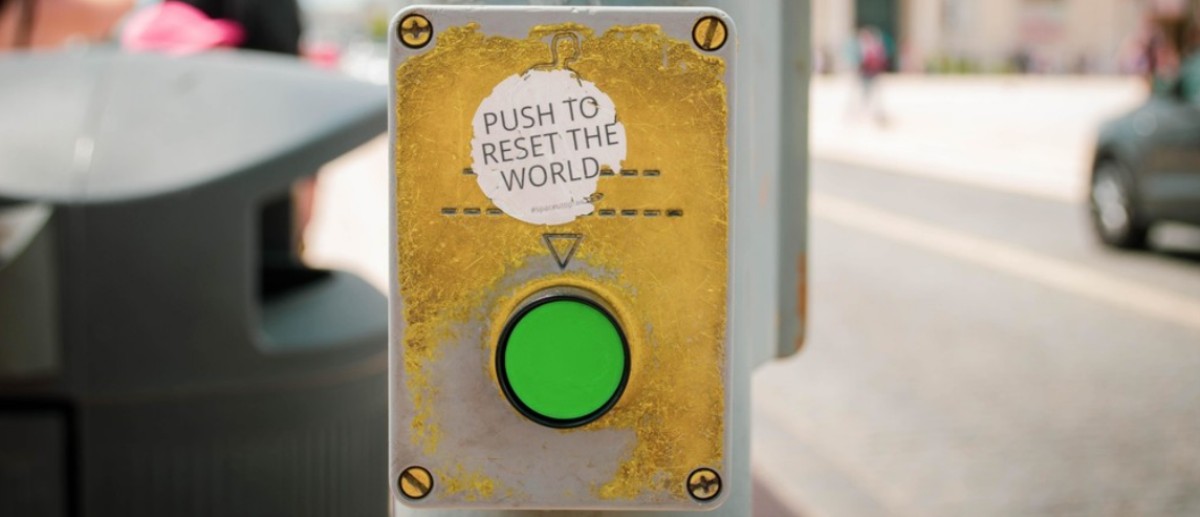
Now is the time for a 'great reset'
To achieve a better outcome, the world must act jointly and swiftly to revamp all aspects of our societies and economies, from education to social contracts and working conditions. Every country, from the United States to China, must partic
To achieve a better outcome, the world must act jointly and swiftly to revamp all aspects of our societies and economies, from education to social contracts and working conditions. Every country, from the United States to China, must participate, and every industry, from oil and gas to tech, must be transformed. In short, we need a “Great Reset” of capitalism.
Responding to the COVID-19 pandemic requires global cooperation among governments, international organizations and the business community, which is at the centre of the World Economic Forum’s mission as the International Organization for Public-Private Cooperation.
Since its launch on 11 March, the Forum’s COVID Action Platform has brought together 1,667 stakeholders from 1,106 businesses and organizations to mitigate the risk and impact of the unprecedented global health emergency that is COVID-19.
The platform is created with the support of the World Health Organization and is open to all businesses and industry groups, as well as other stakeholders, aiming to integrate and inform joint action.
As an organization, the Forum has a track record of supporting efforts to contain epidemics. In 2017, at our Annual Meeting, the Coalition for Epidemic Preparedness Innovations (CEPI) was launched – bringing together experts from government, business, health, academia and civil society to accelerate the development of vaccines. CEPI is currently supporting the race to develop a vaccine against this strand of the coronavirus.
There are many reasons to pursue a Great Reset, but the most urgent is COVID-19. Having already led to hundreds of thousands of deaths, the pandemic represents one of the worst public-health crises in recent history. And, with casualties still mounting in many parts of the world, it is far from over.
This will have serious long-term consequences for economic growth, public debt, employment, and human wellbeing. According to the Financial Times, global government debt has already reached its highest level in peacetime. Moreover, unemployment is skyrocketing in many countries: in the US, for example, one in four workers have filed for unemployment since mid-March, with new weekly claims far above historic highs. The International Monetary Fund expects the world economy to shrink by 3% this year – a downgrade of 6.3 percentage points in just four months.
All of this will exacerbate the climate and social crises that were already underway. Some countries have already used the COVID-19 crisis as an excuse to weaken environmental protections and enforcement. And frustrations over social ills like rising inequality – US billionaires’ combined wealth has increased during the crisis – are intensifying.
Left unaddressed, these crises, together with COVID-19, will deepen and leave the world even less sustainable, less equal, and more fragile. Incremental measures and ad hoc fixes will not suffice to prevent this scenario. We must build entirely new foundations for our economic and social systems.
The level of cooperation and ambition this implies is unprecedented. But it is not some impossible dream. In fact, one silver lining of the pandemic is that it has shown how quickly we can make radical changes to our lifestyles. Almost instantly, the crisis forced businesses and individuals to abandon practices long claimed to be essential, from frequent air travel to working in an office.
Likewise, populations have overwhelmingly shown a willingness to make sacrifices for the sake of health-care and other essential workers and vulnerable populations, such as the elderly. And many companies have stepped up to support their workers, customers, and local communities, in a shift toward the kind of stakeholder capitalism to which they had previously paid lip service.
Originally published by World Economic Forum
Keep reading
Education·28 August 2026
Europe's rivers are warning us with our ancestor's handwriting
ON SOURCE: EUROPEAN CORRESPONDENT Drought My first-ever presentation in primary school was about water. Back then I couldn't have known how much scarcer it would get before I even grew up, or that Europe's rivers are drying up and revealing 400-year-old warnings. Europe's rivers are warning us with
EUROPEAN CORRESPONDENT · 1 min read

Education·19 August 2026
The Polycrisis Calls for Polysolutions
ON SOURCE: FORUM FOR THE FUTURE The Polycrisis Calls for Polysolutions Written by Mareyah Bhatti from Forum for the Future. Earlier this month, I had the pleasure of attending the Food Planet Prize event in Båstad, Sweden. It was a great opportunity to celebrate ambitious food system work from acros
FORUM FOR THE FUTURE · 1 min read
Education·6 July 2026
Global push for AI governance amid warnings of ‘catastrophic harm’
Can artificial intelligence benefit all of humanity – safely, fairly and without causing “catastrophic harm”? That is the question at the heart of a major UN summit opening in Geneva on Monday.
UN News - Global perspective Human stories · 4 min read