
Education·31 July 2019
Just 10% of fossil fuel subsidy cash 'could pay for green transition'
Extinction Rebellion environmental activists in Leeds last month. Ending fossil fuel subsidies has long been seen as vital in tackling the climate emergency. Photograph: Ian Forsyth/Getty Images Redirecting small portion of subsidies would unleash clean energy revolution, says report Damian Carringt
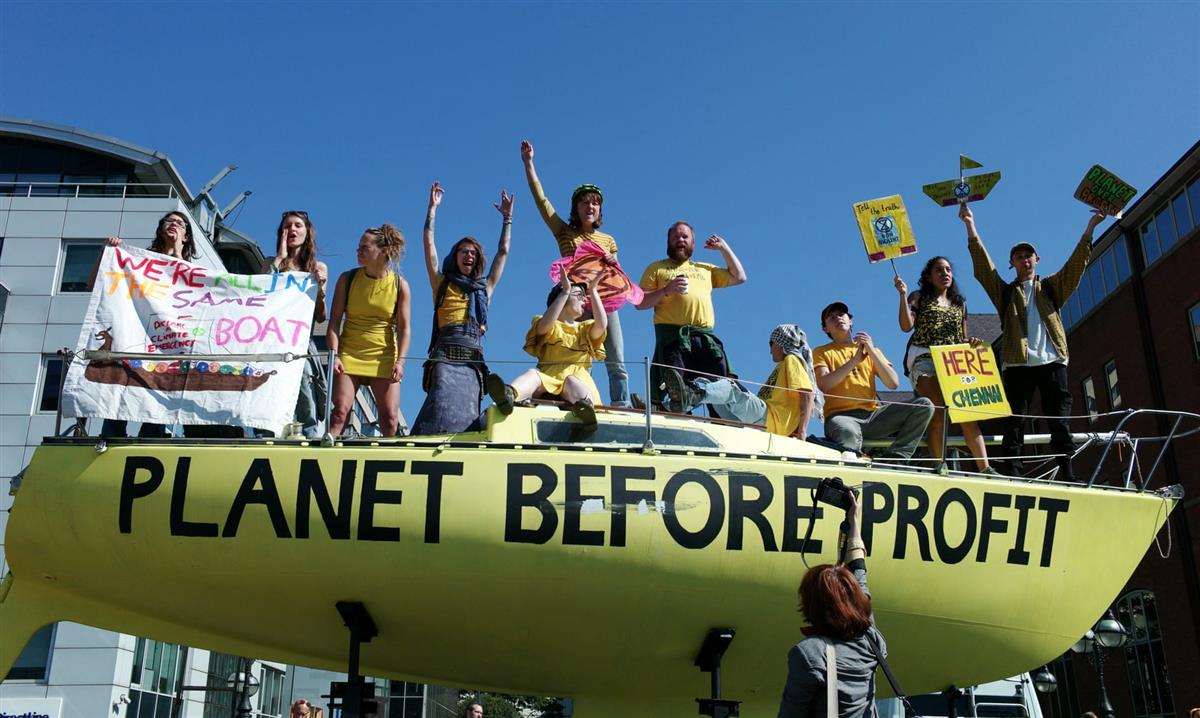 Extinction Rebellion environmental activists in Leeds last month. Ending fossil fuel subsidies has long been seen as vital in tackling the climate emergency. Photograph: Ian Forsyth/Getty Images
Redirecting small portion of subsidies would unleash clean energy revolution, says report
Damian Carrington Environment editor
Thu 1 Aug 2019 09.20 BST Last modified on Thu 1 Aug 2019 14.17 BST
Switching just some of the huge subsidies supporting fossil fuels to renewables would unleash a runaway clean energy revolution, according to a new report, significantly cutting the carbon emissions that are driving the climate crisis.
Coal, oil and gas get more than $370bn (£305bn) a year in support, compared with $100bn for renewables, the International Institute for Sustainable Development (IISD) report found. Just 10-30% of the fossil fuel subsidies would pay for a global transition to clean energy, the IISD said.
Ending fossil fuel subsidies has long been seen as vital to tackling the climate emergency, with the G20 nations pledging in 2009 to phase them out, but progress has been limited. In May, the UN secretary general, António Guterres, attacked subsidies, saying: “What we are doing is using taxpayers’ money – which means our money – to boost hurricanes, to spread droughts, to melt glaciers, to bleach corals. In one word: to destroy the world.”
The new analysis shows how redirecting some of the fossil fuel subsidies could decisively tip the balance in favour of green energy, making it the cheapest electricity available and instigating a rapid global rollout.
“Almost everywhere, renewables are so close to being competitive that [a 10-30% subsidy swap] tips the balance, and turns them from a technology that is slowly growing to one that is instantly the most viable and can replace really large amounts of generation,” said Richard Bridle of the IISD. “It goes from being marginal to an absolute no-brainer.”
The transition from polluting fossil fuels to clean energy is already under way. Annual investment in renewables has been greater than that in fossil fuel electricity generation since 2008 and new renewable capacity has exceeded fossil fuel power each year since 2014.
But progress is slow compared with the urgency required, said Bridle. “There is no question that renewables can power the energy system,” he said. “The question now is can we transition quickly enough away from fuels like coal, and subsidy reform is a very obvious step towards that.” Very few ways of cutting emissions actually save governments money, he said.
“Taking away subsidies from fossil fuels and channelling them towards clean energy would boost their development at a much faster pace, and help secure our climate goals,” said Ipek Gençsü of the Overseas Development Institute. An added bonus is the social and economic benefits, such as reduced air pollution and health spending, she said.
“A key breakthrough [in the energy transition] could occur if countries cut their fossil fuel subsidies, which are propping up dirty energy,” said Rana Adib, the executive secretary of the global sustainable energy network REN21. A recent REN21 report found 112 nations subsidised fossil fuel prices.
Reform of fossil fuel subsidies could have a significant impact on global heating. An earlier IISD study of 20 countries with large fossil fuel subsidies found that a 30% swap to renewables would lead to emissions reductions of between 11% and 18%.
Most experts define fossil fuel subsidies as financial or tax support for those buying fuel or the companies producing it. The IMF also includes the cost of the damage fossil fuel burning causes to climate and health, leading to an estimate of $5.2tn of fossil fuel subsidies in 2017, or $10m a minute. Ending the subsidies would cut global emissions by about a quarter, the IMF estimates, and halve the number of early deaths from fossil fuel air pollution.
Bridle said funding fossil fuel subsidies was “madness”, but said ending them could cause short-term price rises and political difficulties, as the benefits of lower costs in the future and reduced air pollution are less obvious.
“There are political problems but it is worth persevering because the prize is so big,” he said. “You have to bring people along with you.” Gençsü said governments must ensure that the most vulnerable people were not adversely affected by changes.
Fossil fuel subsidies are most prominent in oil-producing nations such as Saudi Arabia, which subsidises petrol, and some coal-using countries such as Indonesia, which caps the cost of the fuel at 75% of the market rate. Some nations are making progress, with India cutting petrol subsidies by about 75% since 2014, according to the IISD.
SOURCE: THE GUARDIAN
Keep reading
Education·28 August 2026
Europe's rivers are warning us with our ancestor's handwriting
ON SOURCE: EUROPEAN CORRESPONDENT Drought My first-ever presentation in primary school was about water. Back then I couldn't have known how much scarcer it would get before I even grew up, or that Europe's rivers are drying up and revealing 400-year-old warnings. Europe's rivers are warning us with
EUROPEAN CORRESPONDENT · 1 min read

Education·19 August 2026
The Polycrisis Calls for Polysolutions
ON SOURCE: FORUM FOR THE FUTURE The Polycrisis Calls for Polysolutions Written by Mareyah Bhatti from Forum for the Future. Earlier this month, I had the pleasure of attending the Food Planet Prize event in Båstad, Sweden. It was a great opportunity to celebrate ambitious food system work from acros
FORUM FOR THE FUTURE · 1 min read

Education·6 July 2026
Global push for AI governance amid warnings of ‘catastrophic harm’
Can artificial intelligence benefit all of humanity – safely, fairly and without causing “catastrophic harm”? That is the question at the heart of a major UN summit opening in Geneva on Monday.
UN News - Global perspective Human stories · 4 min read