
New Museum·1 January 2019
A Sweet Gig: Danish Beekeeping Program Employs Refugees
By operating urban beehives year-round, Bybi helps the environment, gives training, and creates opportunity.
(Photo: Courtesy Bybi)
By operating urban beehives year-round, Bybi helps the environment, gives training, and creates opportunity.
Oct 9, 2016
Jennifer Hattam is an Istanbul-based freelance journalist covering the environment, politics, social issues, and urbanism for publications including The Atlantic, Discover, and Sierra.
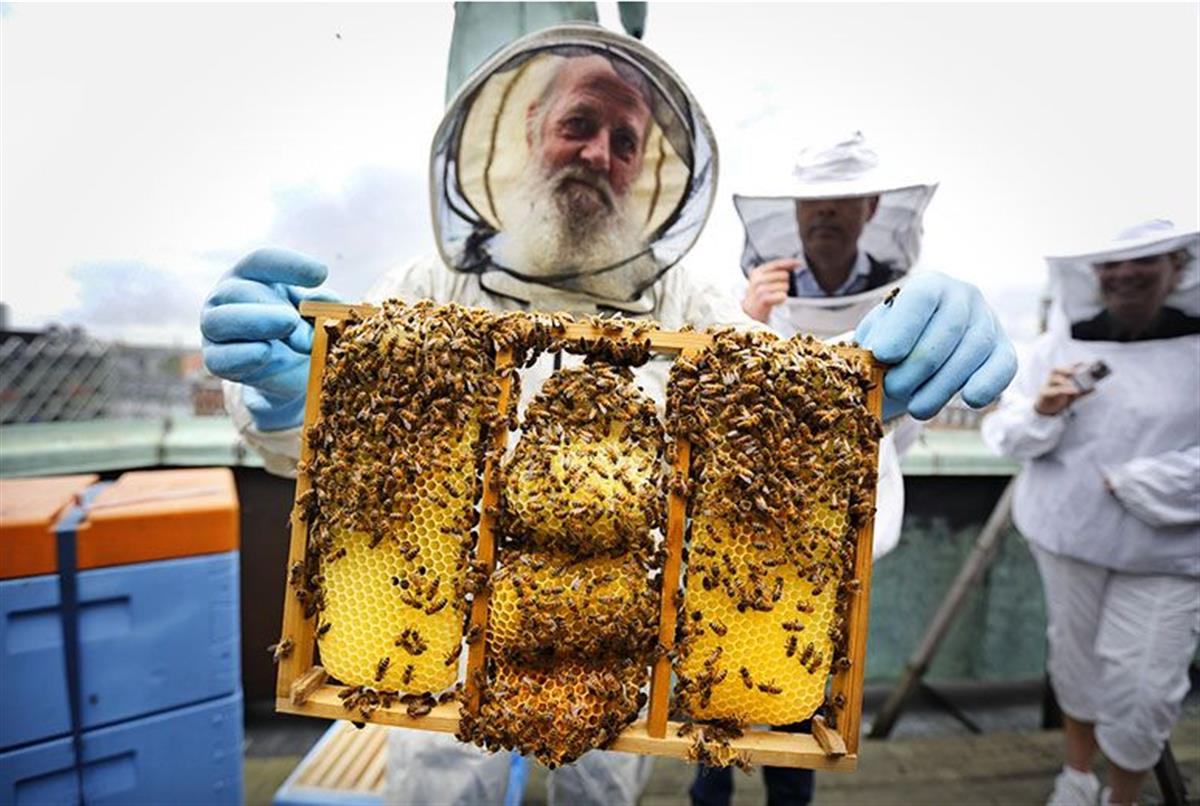
A vast meadow called the Amager Fælled stretches out toward the ocean below the AC Hotel Bella Sky in central Copenhagen, affording patrons of the hotel’s 23rd-floor bar a soothing view. Those who can tear their eyes away from its marshy ponds and grassy expanses, dappled with heather, creeping willow, and blackberry bushes, might spot some orange boxes on the rooftop of the neighboring convention center—urban beehives, the source of the locally made honey that flavors the amber ale served in the hotel’s Sky Bar.
Syrian beekeeper Aref Haboo is among Bybi’s small staff. He kept dozens of hives back in his home village while also working as a civil servant and agricultural consultant. Like millions of refugees fleeing Syria's civil war, Haboo made the treacherous journey to Europe, part of it smuggled in the cargo hold of a truck, leaving behind his wife and three children to find a safer place for them all to live. A year ago, he was able to reunite his family in Denmark.
“He’s one of the lucky ones, but it’s still an incredibly difficult situation,” says social entrepreneur Oliver Maxwell, who founded Bybi in 2010. “He told me, ‘I had everything in Syria, a nice house with a garden, a good job, my kids in school, and here I have nothing.’ But his face lit up when he first saw our hives and what we were doing with the bees.”
“The changes we’re seeing in Denmark and around Europe in terms of the economy and the refugee crisis are splitting Danish society right down the middle,” adds Maxwell. “But bees are something universal—there’s nowhere in the world where people don’t have stories in their culture about bees and honey.”
Beekeeper Haboo recently helped teach a season-long apiculture course to a mixed group of around 20 Syrians, Africans, and Europeans, who produced 450 kilograms of honey from hives in a Copenhagen park. Graduates who want to continue working with bees will receive support from Bybi, and proceeds from the sale of the first course’s honey will help fund training sessions.
“A lot of our residents have difficulties getting into the Danish labor market, whether because of language issues, skills gaps, or health problems. Working with Bybi is good for them in terms of getting out to meet people and doing something constructive, something they can be proud of,” says Simon Christopher Hansen, cultural coordinator for the Copenhagen public housing association 3B.
Social organizations like 3B and the Danish Red Cross help Bybi find its beekeeper trainees, while corporate partners such as the BC Hospitality Group, Copenhagen Airport, and development company Carlsberg Byen provide space for the hives in return for a share of the honey produced and some good “buzz” in the community.
“We bottle and label the honey our residents make with Bybi and sell it within and outside our community,” says 3B’s Hansen. “It helps fight stigma about social housing to show we can make something locally, something delicious, right here.”
This year, some 70 people, including four Bybi staff and around a dozen 3B residents, as well as participants from other social-inclusion partnerships, helped tend 20 hive sites scattered around the city. The 4.5 tons of total honey produced will be used to make ice cream, candy, beer, and candles for sale, along with gift packs of honey.
“Each site’s honey has its own flavor: The honey from our hives at the airport has a pale yellow color and a lighter flavor, while the honey made from hives on the rooftop of city hall has a dark color and a rich, nutty flavor,” Maxwell says. “You can almost read the city through the bees—the parks, the window boxes, the gardens they flew into, what kinds of plants and trees they met while they were out there.”
With relatively high rates of winter mortality among honeybees in Denmark, Bybi’s urban hives also help ensure that bee populations stay healthy—along with the green environment they nurture and depend on.
In a way, Maxwell sees the hive as a model for Bybi and for humanity. “We’re looking at ways we can work together that protect our communities and enrich our environment,” he says. “That’s what bees do: They create bigger apples, richer strawberries; they help everything thrive.”
SOURCE: TAKE PART
Originally published by the source
Keep reading
New Museum·14 April 2026
Featured Story: A knowledge transporter in Afghanistan
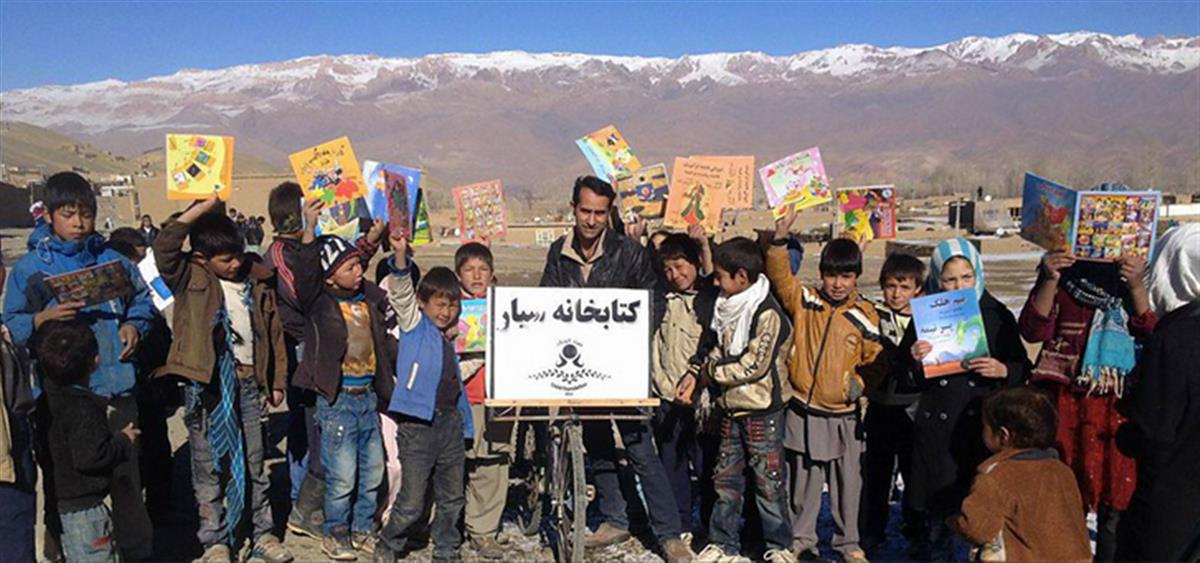
School teacher Saber Hosseini from Bamyan, Afghanistan, cycles more than an hour to deliver books to children in remote villages in the province.
2 min read

New Museum·27 November 2025
Featured: Utopia For Realists - and how we can get there.
Visited the Wellcome Collection yesterday and came away with Utopia For Realists (ON Ed) Utopia for Realists is one of those rare books that takes you by surprise and challenges what you think you know. Rutger Bregman takes us on a journey…
1 min read

New Museum·16 October 2025
Featured Archive Story: Ubuntu - I am because we are
An anthropologist proposed a game to children in an African tribe. He put a basket of fruit near a tree and told the children whoever got there first won the sweet fruits. When he told them to run they all took each others hands and ran…
2 min read